ServicesFilter replacement and maintenance
Filter Replacement and Maintenance in Addison
Filters work quietly until they stop working. We change cartridges, sanitize housings, replace worn O-rings and check pressure on the systems already in your home. Before anything comes apart, we write down what the visit includes and what it costs.
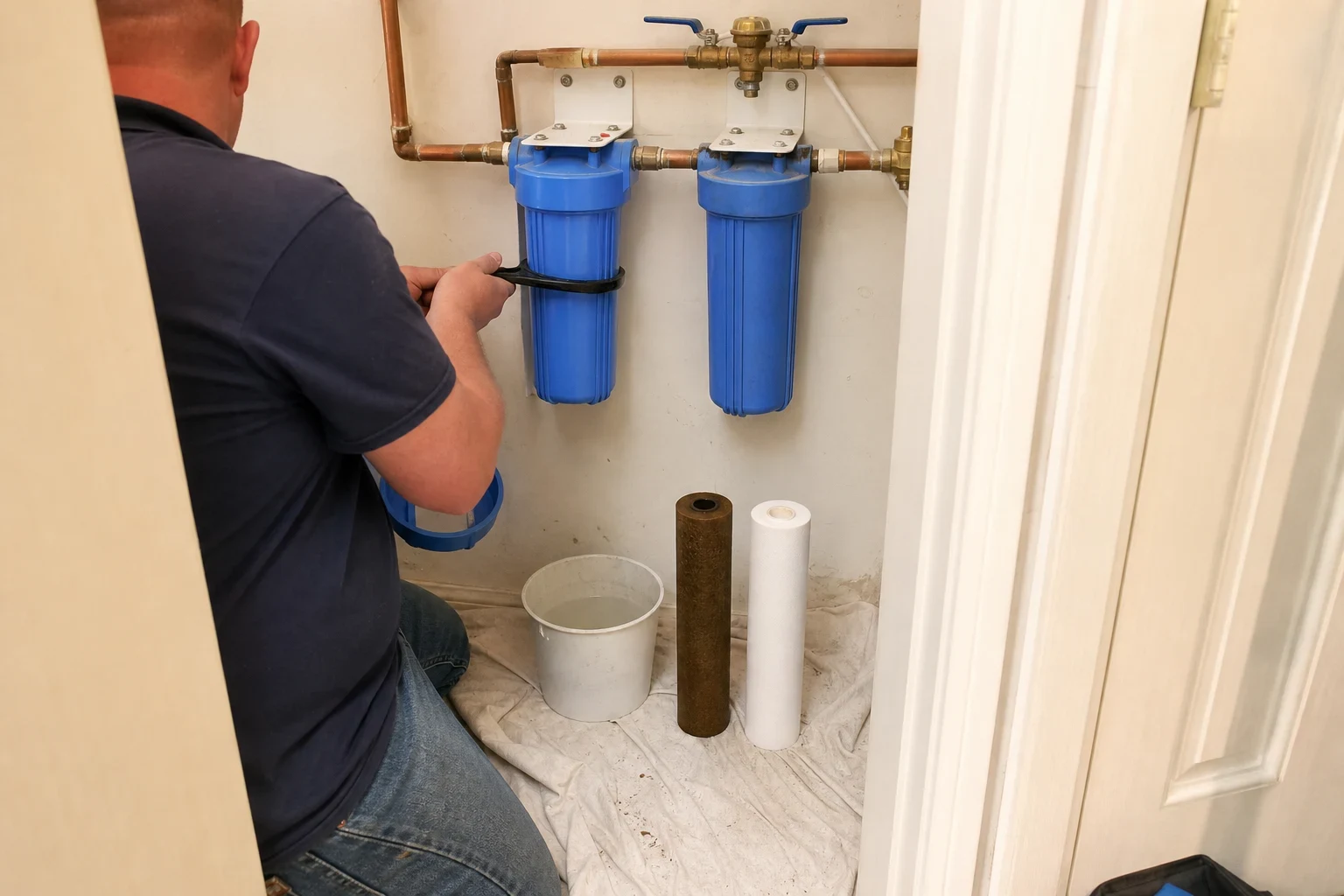
Keeping the system you already own working
A water filter is only as good as its last cartridge change. Carbon stops grabbing chlorine once its surface is used up. Sediment filters clog and choke your water pressure. A reverse osmosis membrane slowly lets more through as it ages. You rarely notice any of this at the tap until the taste, smell or flow changes.
We service whole-house carbon systems, iron and sediment filters, water softeners and under-sink reverse osmosis units, including many we didn't install. Before we touch anything, you get a written list of the parts we plan to replace and the labor involved. The total at the end matches what you agreed to.
If something looks worn beyond a simple swap, we show you and let you decide.
What each service visit includes
Replacing cartridges and media
We put in sediment, carbon and specialty cartridges that match the size and micron rating your housing was built for. With bigger whole-house tanks, we check whether the carbon bed should be replaced or simply backwashed.
Cleaning and sanitizing housings
Housings build up slime and grit over time. We drain, scrub and sanitize each one, so the new cartridge goes into a clean sump rather than a dirty one.
Seals and O-rings
We check each O-ring, coat it with food-grade silicone and swap out any that are flat, cracked or stretched. Worn O-rings are the usual reason a housing begins to drip after a change.
Checking the RO membrane and tank
We measure your RO water with a TDS meter, compare it with the water coming in and check the air charge in the storage tank. The readings show whether the membrane still works or needs replacing.
Softener checkup
We check the salt, break up any salt bridge, clean the brine tank when needed and make sure the regeneration settings still match your household's water use.
Your service record in writing
We leave a note with what we replaced, the date and when each part will probably need changing again.
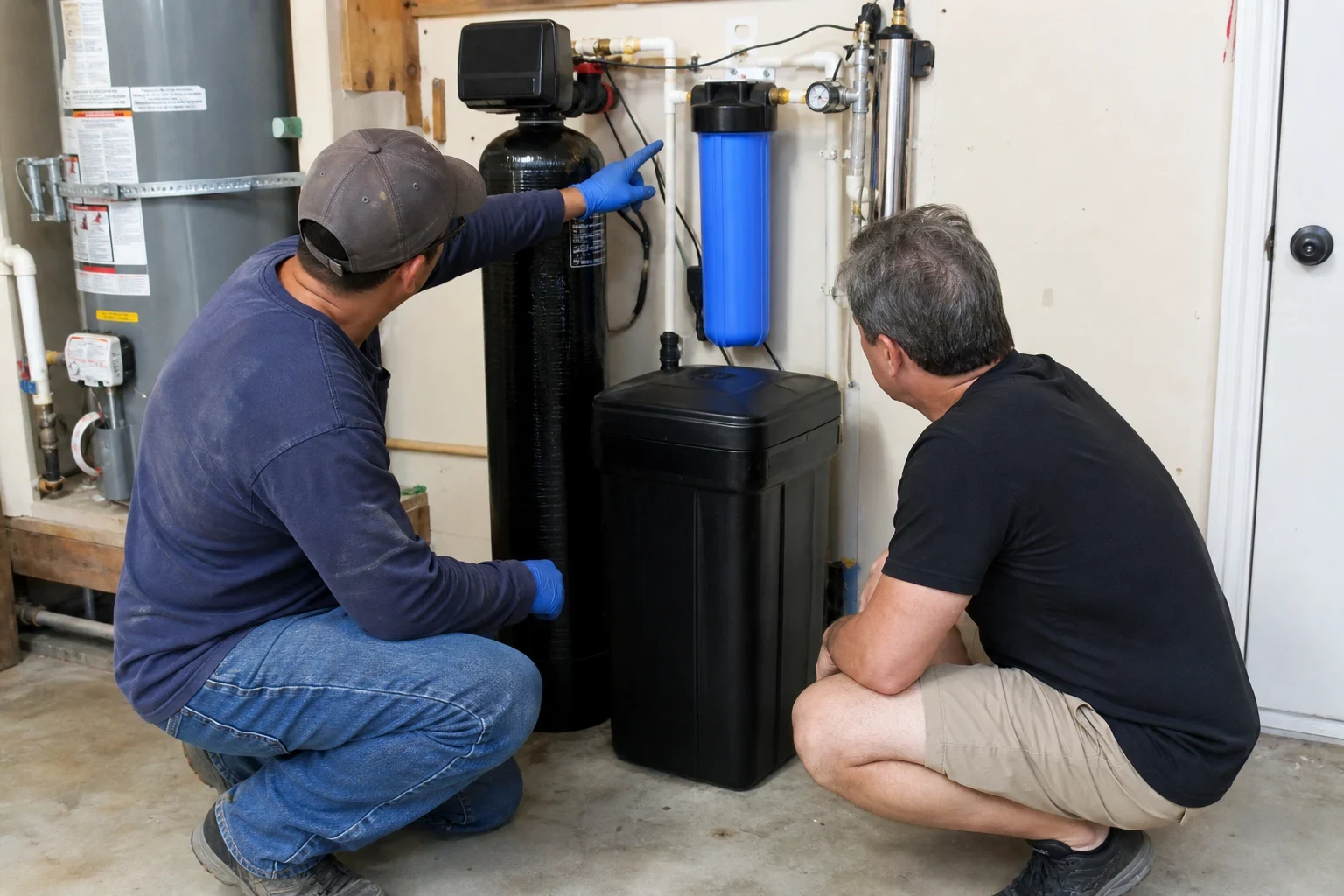
Signs your filters are past due
- The pool smell has returned
- Once the carbon is used up, the chlorine smell comes back, usually a sign the cartridge or media has reached the end of its life.
- Weaker water pressure
- A clogged sediment filter slows down showers and fill-ups. Pressure that slips little by little over several months is a typical sign.
- Water around a housing
- Moisture at a filter housing usually means a worn O-ring or a cracked sump. Catch it early, before it harms a cabinet or floor.
- Slow flow or odd taste from the RO faucet
- A weak stream or a flat, strange taste at the drinking faucet usually comes from clogged prefilters or an aging membrane. Sometimes the storage tank just needs its air pressure topped up.
- Nobody knows when it was last changed
- If the housing has no date, or the system came with a home you bought, it makes sense to start over with a known baseline.
How a filter service visit goes
- 1
Phone call and written quote
Describe the equipment over the phone: the brand or model if it's printed on the housing, or just how many canisters there are and where they sit. We explain the likely parts and labor and put the scope and price factors in writing before the visit.
- 2
We look before we change anything
On the day, we shut off water to the system, open the housings and note what we find. If the plan needs to change, we explain why and update the written quote before going further.
- 3
Service and test
We swap cartridges, clean housings and replace seals, then slowly restore water, purge the air and flush the new media. We check every connection for leaks and confirm pressure, plus TDS readings on RO systems.
- 4
Cleanup and your next date
We bag the old cartridges, wipe up under the sink or around the equipment and leave you a service note with the next suggested change date.
What sets the price of filter service
A maintenance visit's price comes mainly from the parts your system takes and how many stages it has. You get the number in writing before we begin. If opening the housings reveals something more, we pause and check with you.
- How many stages, and what kind
- Servicing one sediment housing takes less time than a five-stage reverse osmosis unit or a whole-house tank with a carbon bed.
- Cartridge size and supply
- Some systems use standard sizes that are easy to find. Others take proprietary cartridges from the original maker only, which cost more and may need to be ordered.
- The shape your system is in
- Filters left far past due can leave housings badly fouled, a sump cracked or a membrane worn enough to replace along with the cartridges.
- How easy it is to reach
- Equipment squeezed into a small sink cabinet or a packed garage corner takes more time than equipment with space around it.
- More than one system per visit
- Servicing a whole-house filter and an RO unit on one trip generally costs less than booking two visits.
Questions about filter maintenance
- How often should cartridges be changed?
- No one schedule suits every home. A family of five uses up a sediment cartridge faster than a couple with the same equipment. Sediment and carbon cartridges often last anywhere from a few months to a year, and an RO membrane typically lasts well beyond its prefilters. After we see your system and learn how you use water, we will recommend a change schedule that fits.
- Will you work on a system another company installed?
- In most cases, yes. Most housings use standard cartridge sizes, and we can get parts for many proprietary systems. If a part is hard to find, we will let you know by phone or in the written quote before scheduling.
- Is it okay to change cartridges on my own?
- Many homeowners do, and we are glad to walk you through it. Common mistakes are pinched O-rings, housings tightened too far and skipping the sanitizing step. Some people would just rather have it done and logged for them.
- Will the water be shut off while you work?
- Only to the system being serviced, and usually briefly. With an under-sink unit, the rest of the house has water the whole time. For whole-house equipment, we give you a rough idea of how long the water will be off before we begin.
- What if my system is too worn to service?
- We will tell you directly and show you what we see. Sometimes a new housing or membrane fixes it, and sometimes replacing the system makes more sense. If your water has changed and you do not know why, water testing first can show what a new system needs to handle.
Let's set your next filter change
Describe the equipment you have, and we'll write out the parts and labor before anyone comes to your door. We look after systems in homes across Addison and nearby towns like Farmers Branch and Carrollton.