ServicesWater testing
Water Testing in Addison, TX
A filter should answer a real question, and testing is how you ask it. We check the water that comes out of your own taps, walk you through the numbers in everyday words and write down any recommendation with its scope and price factors. Sometimes the honest result is that nothing needs changing.
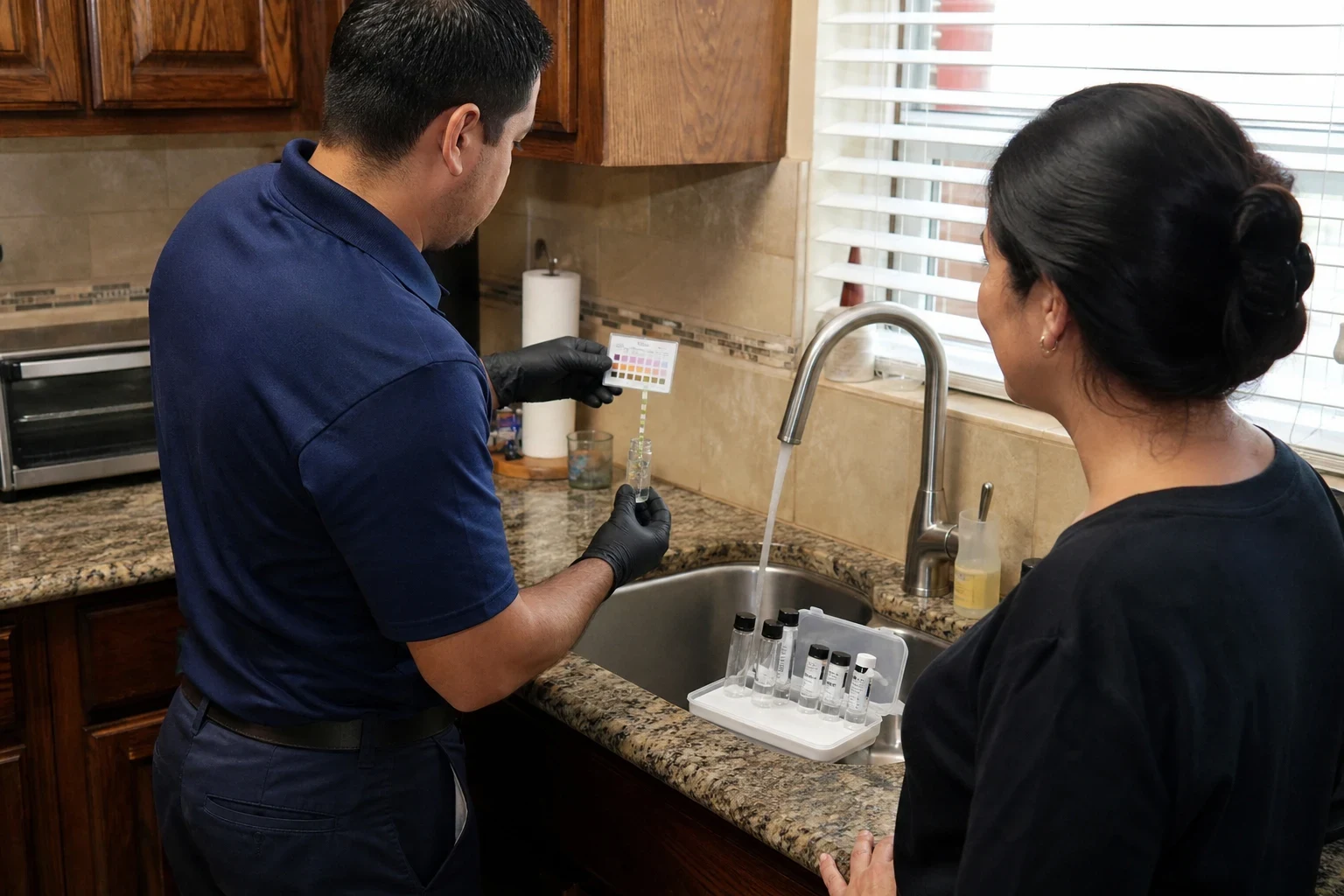
Test first, then decide
City water is treated and regulated, and your utility publishes an annual water quality report. That is good news. It also means a filter should solve a problem you can name, like a chlorine smell, rust-colored stains, white crust on fixtures or worry about older pipes.
That report describes water as it leaves the treatment system. It cannot tell you what happens in the last stretch, inside your own plumbing, where aging pipes, old solder, a water heater full of sediment or a worn fixture can change what comes out of the faucet. That last stretch is what we check in your home.
After the test you get a written summary of what we found. If treatment makes sense, you also get a written quote that lists the equipment, the installation work and what affects the price, so nothing gets added later.
What a water test with us includes
- On-site screening at your tap
- Using portable test kits, we measure hardness, iron, chlorine, pH and dissolved minerals right at the kitchen sink. You watch each reading as it comes up.
- Lab sampling when it matters
- Some things, like lead, need a lab to measure reliably. We show you how to collect a proper first-draw sample and send it to an independent lab.
- A look at your plumbing
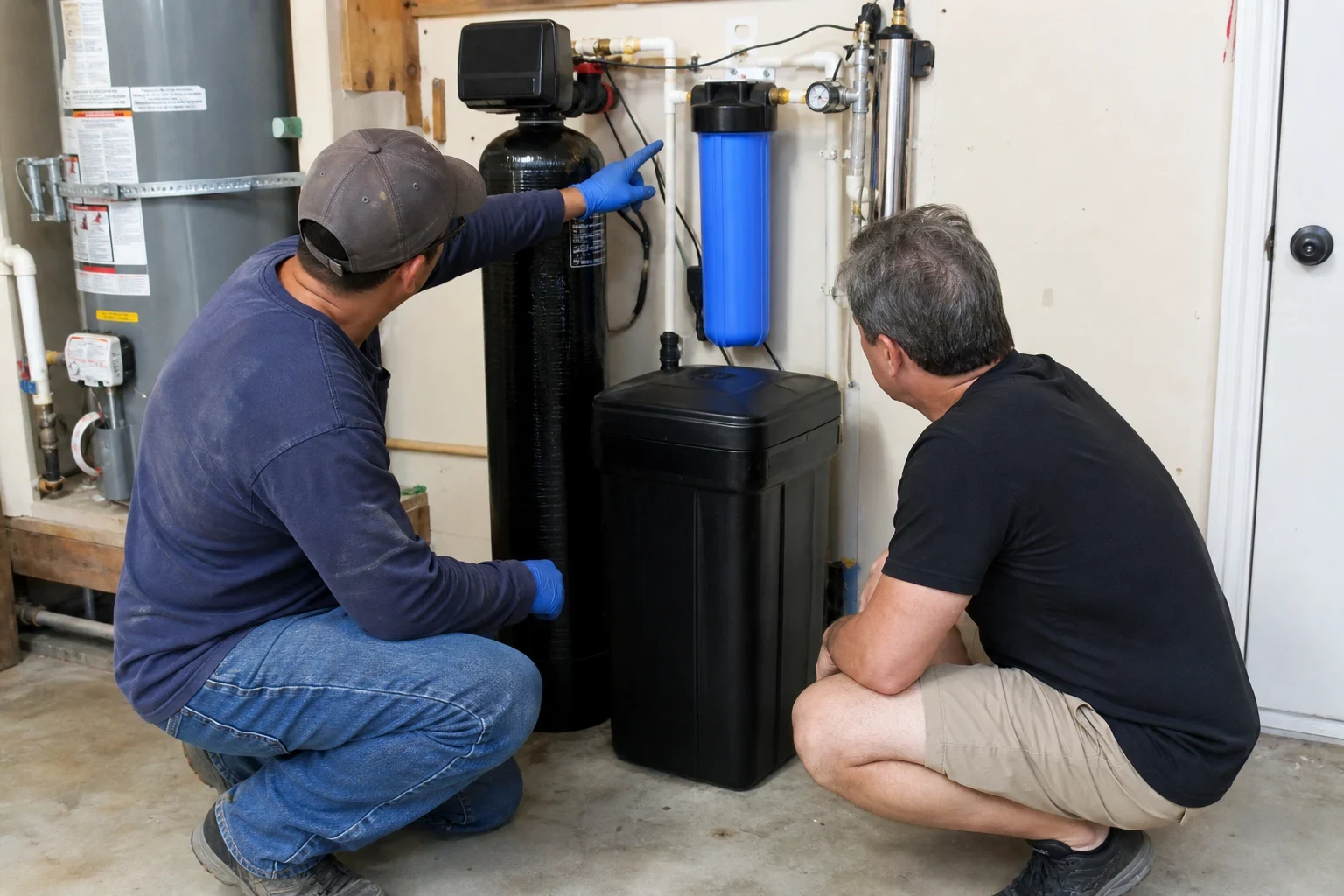
- We note your pipe materials, the age of your water heater and where a filter could fit. That shapes any recommendation we make later.
- Results in plain language
- Your written summary compares each result with the federal standard or a common comfort range. No jargon, and no scare tactics.
- An honest recommendation
- If your water is fine, we say so. If something would help, we name the one system that fits the problem, from whole-house carbon filtration to under-sink reverse osmosis, and quote it in writing.
When it makes sense to test your water
A chlorine smell or taste
Tap water that smells like a pool, often most noticeable in the morning. Testing confirms the level and whether carbon filtration would really help.
Stained fixtures or clothes
Orange, brown or reddish marks on sinks, toilets or white laundry usually mean iron or rusting pipes. We figure out which is behind it.
Scale and spots on dishes
White buildup on faucets can point to hardness, but not always enough to warrant a softener. Measuring first can keep money in your pocket.
A home with some age
Houses built before the 1986 federal ban on lead solder may have it in the joints of copper pipe. Only a lab lead test can tell you for certain.
A baby on the way or a health concern
Plenty of families want baseline numbers when a baby comes. Clear results give you facts to share with your doctor.
Water that is cloudy or gritty
Grit in aerators or cloudy water following nearby line work can signal sediment. Testing finds the cause, which might lead to iron and sediment filtration or to no treatment at all.
What affects the cost of water testing
Testing costs depend mostly on what we are testing for and where the analysis happens. We give you the price for your test by phone before the visit, so there is no guessing. If the results lead to a filter quote, that quote is separate and in writing.
Field tests or lab analysis
Basic screening for hardness, iron, chlorine and pH happens on site. Lab panels for lead, metals or bacteria cost more because an independent lab runs them.
Number of taps and samples
One kitchen sample is the simplest. Testing several fixtures, or taking both first-draw and flushed samples for lead, adds bottles and lab fees.
Your water source
City water needs a shorter list of tests. A private well calls for bacteria testing and a broader panel.
Retesting after treatment
Checking your water again after a filter goes in confirms it is doing its job. We list that option on the quote so it never shows up as a surprise.
How a testing visit goes
- 1
A short phone conversation
Tell us what you have noticed and roughly how old your home is. We explain which tests make sense and what affects the cost before we put anything on the calendar.
- 2
The visit
We test at the kitchen tap and usually one more fixture, check where water enters your home and look at the water heater. We keep to those areas and leave them as we found them.
- 3
Lab samples if needed
If lead or another lab test is part of the plan, we bottle and label the samples and send them off. We tell you about when to expect results.
- 4
Your written results
We walk through the field numbers with you before we leave, and call you once lab results arrive. You get everything in writing, and any filter quote lists each line so you know exactly what it covers.
Water testing questions
Isn't my city water already tested?
Yes. Your utility tests regularly and publishes an annual water quality report. That testing happens in the public system, not at your faucet, so it cannot show what your own pipes, water heater or fixtures add. Our test fills that gap.
Will you try to sell me a filter?
We tell you what the results show. Plenty of homes need nothing, and we say so plainly. When a system would solve a real problem, we put the scope and price factors in writing and you decide on your own time.
Do I need a water softener?
Maybe not. A softener is worth it only when your measured hardness and the scale you are seeing support it. That is why we recommend water softeners only after a hardness test.
How do you test for lead?
Lead usually comes from household plumbing, not the water source, so we test water that has been sitting in your pipes. We explain how to collect a first-draw sample after the water has gone unused for several hours, then send it to an independent lab. You get a measured level, not a guess.
Do I need to be home for the visit?
Yes, an adult should be there so we can reach the kitchen, a bathroom and the spot where water enters your home. We work around your schedule and keep the visit tidy.
Find out what is in your water
A short call gets your questions answered and a free water test for your home on the calendar. Your results arrive in writing, and any quote that follows is free too.