ServicesIron and sediment filtration
Iron and Sediment Filtration in Addison
Orange rings in the toilet, grit in faucet screens and cloudy glasses usually trace back to iron or sediment in the water. We test to find which one, recommend a filter sized for your home, and give you the scope and price factors in writing first.
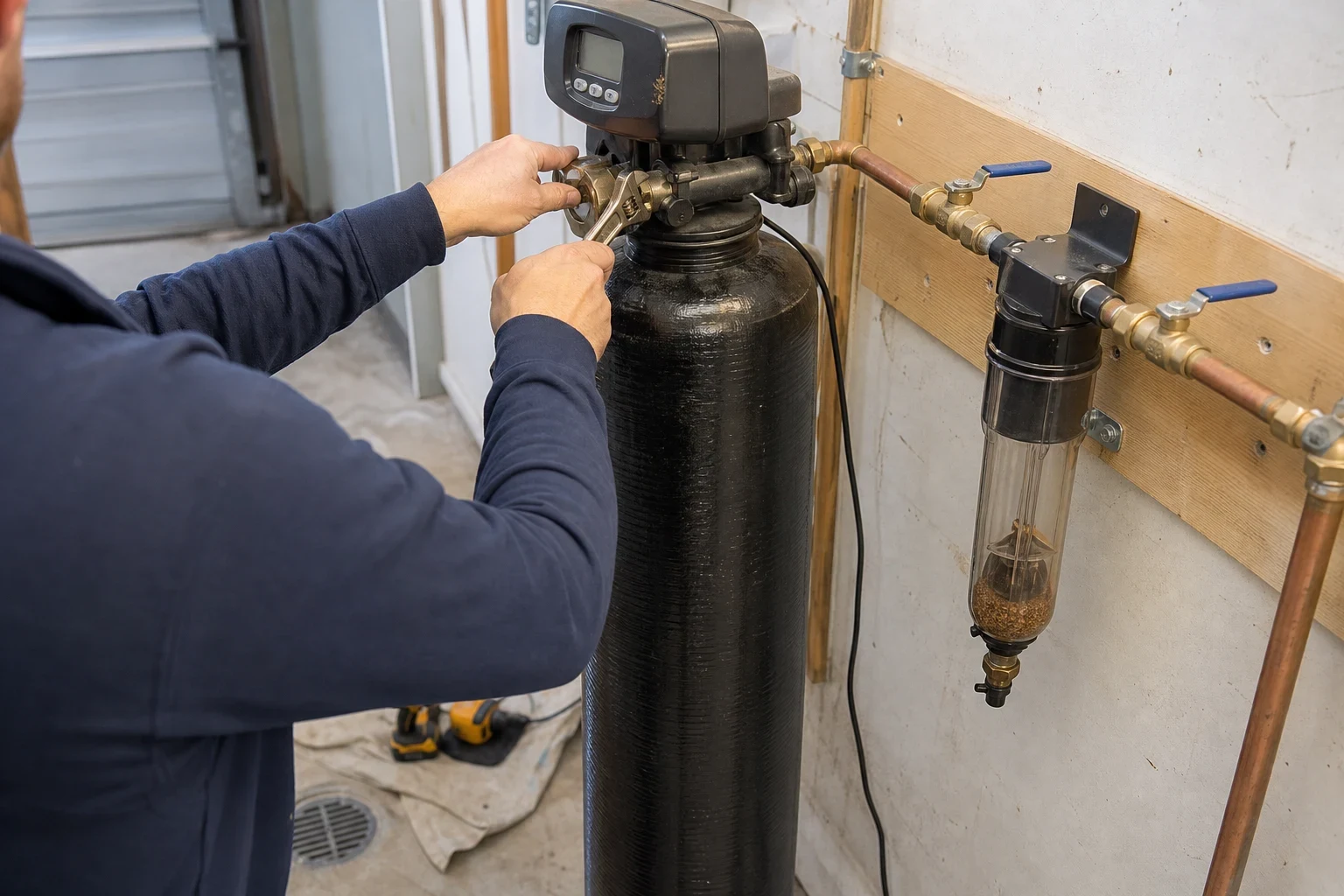
Grit, rust and the right filter for each
Rust and grit often arrive together, but they are not the same thing. Grit is solid material: sand, flakes of rust and loose pipe scale carried along until they drop out in aerators, shower heads and the bottom of your water heater. Iron behaves differently. Sometimes it is dissolved, so the water runs clear and only turns orange or brown once it sits. Other times it is already in visible particles.
A sediment filter strains out the solid material. Dissolved iron needs a different approach, usually a media filter that changes the iron into particles and traps them. We find out which you have before suggesting anything, because a simple sediment cartridge will not stop clear-water iron, and an iron system is more than you need if grit is the only issue.
Most homes we visit are on city water, so iron often comes from aging galvanized pipes or from sediment stirred up after main repairs. That shapes what we recommend, and we explain it plainly in your quote.
What the work includes
- Testing before any recommendation
- Before we suggest equipment, we measure iron and sediment in your water, along with pH, since it changes how well iron media performs. We walk you through the results and what they mean for your home.
- Matching the filter to the problem
- For grit and scale, a spin-down screen or cartridge housing with the right micron rating. For dissolved iron, a backwashing media tank. Some homes need both, with the sediment stage first.
- Main-line installation with a bypass
- We install at the point where water enters your home and add a bypass valve, so you keep water during filter changes or if you ever need to shut the system off.
- Drain and power planning
- Backwashing tanks need a drain line and an outlet for the control valve. We look at where those are during the visit and list any extra plumbing in the written quote.
- Protecting other equipment
- If you have or plan to add whole-house carbon filtration or a softener, we place the iron and sediment stage ahead of it so grit does not foul the media.
- Startup, cleanup and a walkthrough
- We flush the system, check for leaks, set the backwash schedule and show you how the bypass works. Old fittings and packaging leave with us.
How iron or sediment shows up at home
Rust-colored staining
Iron tends to leave orange or brown rings in toilets, tubs and sinks and to mark white laundry. Scrubbing only removes them for a while.
Grit in faucet screens and shower heads
Needing to rinse sand or flakes out of faucet screens again and again means sediment is making it to your fixtures.
Clear water that turns color
Water that comes out clear, then goes yellow or orange in a glass or tub, usually holds dissolved iron that reacts once it meets air.
Water with a metal flavor
Even at levels that are not a health concern, iron leaves coffee, tea and plain water tasting flat and metallic.
Rusty water after the house sits overnight
If the first water of the morning is discolored, older pipes inside the home are often the source. We will be straight with you if replacing pipe would serve you better over time.
Why prices differ from home to home
Some homes need only a basic housing, others a full media system, so the cost spreads widely. The factors below appear in your written quote as they fit your house, so the price makes sense to you.
What we are treating
Grit by itself generally calls for less equipment than dissolved iron. When a home has both, it takes two stages.
How much iron, and the water's chemistry
A high iron reading or low pH may mean a bigger tank, another media type or a step to adjust pH.
How much water your home uses
Extra bathrooms and people raise the flow, and flow decides how large the tank or housing must be to keep pressure even.
Reaching the main line
Work on an easy-to-reach main line costs less than work in a cramped closet or behind finished drywall. Adding a drain line or an outlet adds labor.
City permits and later upkeep
When the connection requires a city permit, the quote shows it. It also lists what replacement cartridges or media will cost down the road.
What to expect, step by step
- 1
Call and describe the problem
Let us know about the stains, grit or taste, the age of your plumbing and any treatment equipment already in place, so we arrive with the right test supplies.
- 2
Test and inspect
We test your water on site, locate where the main line comes in and check for a nearby drain and outlet. Anything that affects the install gets photographed.
- 3
A quote on paper
The recommended equipment, the labor and each factor behind the price are written out for you. Install day brings nothing that is missing from that page.
- 4
Installation
We let you know ahead of time about how long the water will be off. Then we install, flush and test what comes out, and review the upkeep schedule with you.
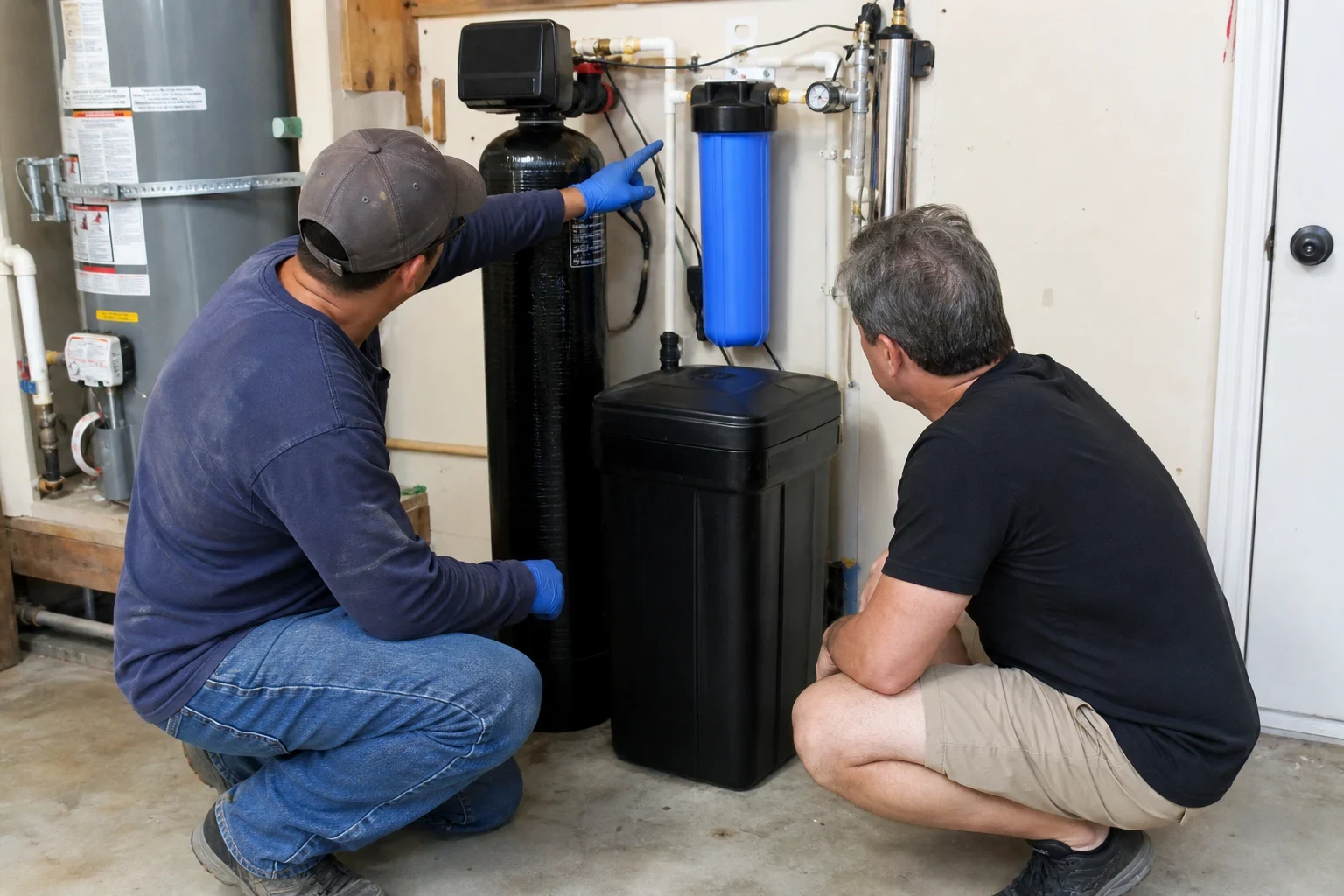
Iron and sediment filter questions
Can iron in the water hurt my family?
At the levels common in home water, iron is a nuisance rather than a health risk. It stains fixtures and clothes and changes the taste. Your test gives the real number, and if anything else in the water needs attention, we will tell you directly.
Does a sediment filter take out iron?
It catches iron only once it has formed particles. Dissolved iron goes straight through a sediment cartridge, which is why we test first, so you do not pay for a filter that leaves the stains in place.
How much upkeep does the filter need?
Sediment cartridges generally get changed every few months, depending on how much grit comes through. Media tanks backwash themselves on a timer, and the media itself is replaced every few years. Our filter replacement and maintenance service can take care of those visits.
Will I also need a water softener?
Usually not, since hardness and iron are two different problems. If the test also shows hard water, we will discuss a water softener, but we recommend one only when the numbers back it up.
Might my own pipes be causing this?
It happens. Galvanized pipe that is corroding can put rust into water that was clean when it arrived. A main-line filter cannot stop rust that enters downstream of it, so if your pipes look like the cause, we say so before you buy equipment.
Find out what is staining your fixtures
Call and tell us what you are seeing. We will set up a time to test your water and put the recommended fix and its price factors in writing before any work starts.